Mastering the art of lifting
In the last decade, the discussion around lifting heavy objects has surged, especially with the rise of proper manual handling and lifting techniques.
At Chiropractor Van Innis, we understand that many of our patients are engaged in physically demanding jobs, such as construction workers, craftsmen, or individuals lifting extensively for their work. A common complaint is that while training for proper lifting techniques is excellent, applying it in real-life situations, especially in a time-pressed work environment, can be challenging. Craftsmen, in particular, are tackling an extensive list of tasks and customer requests nationwide, often under tight schedules.
Take, for example, masons performing repetitive motions daily, handling up to 300 stones or blocks, involving twisting, bending, and turning. The constant use of their spine in various directions can accumulate significant stress over time.
At Chiropractor Van Innis, we recognize that many of our patients involved in physically demanding professions, like construction workers, craftsmen, or those lifting as part of their work, find the training for proper lifting techniques excellent but challenging to apply in practical, time-sensitive work settings.
For instance, masons engage in repetitive movements daily, handling up to 300 stones or blocks, incorporating twists, bends, and turns. The continuous use of their spine in diverse directions can result in substantial stress over time.
The best way to lift: an anatomical approach
From an anatomical perspective, humans are designed to engage their gluteal muscles for proper extension from the floor.
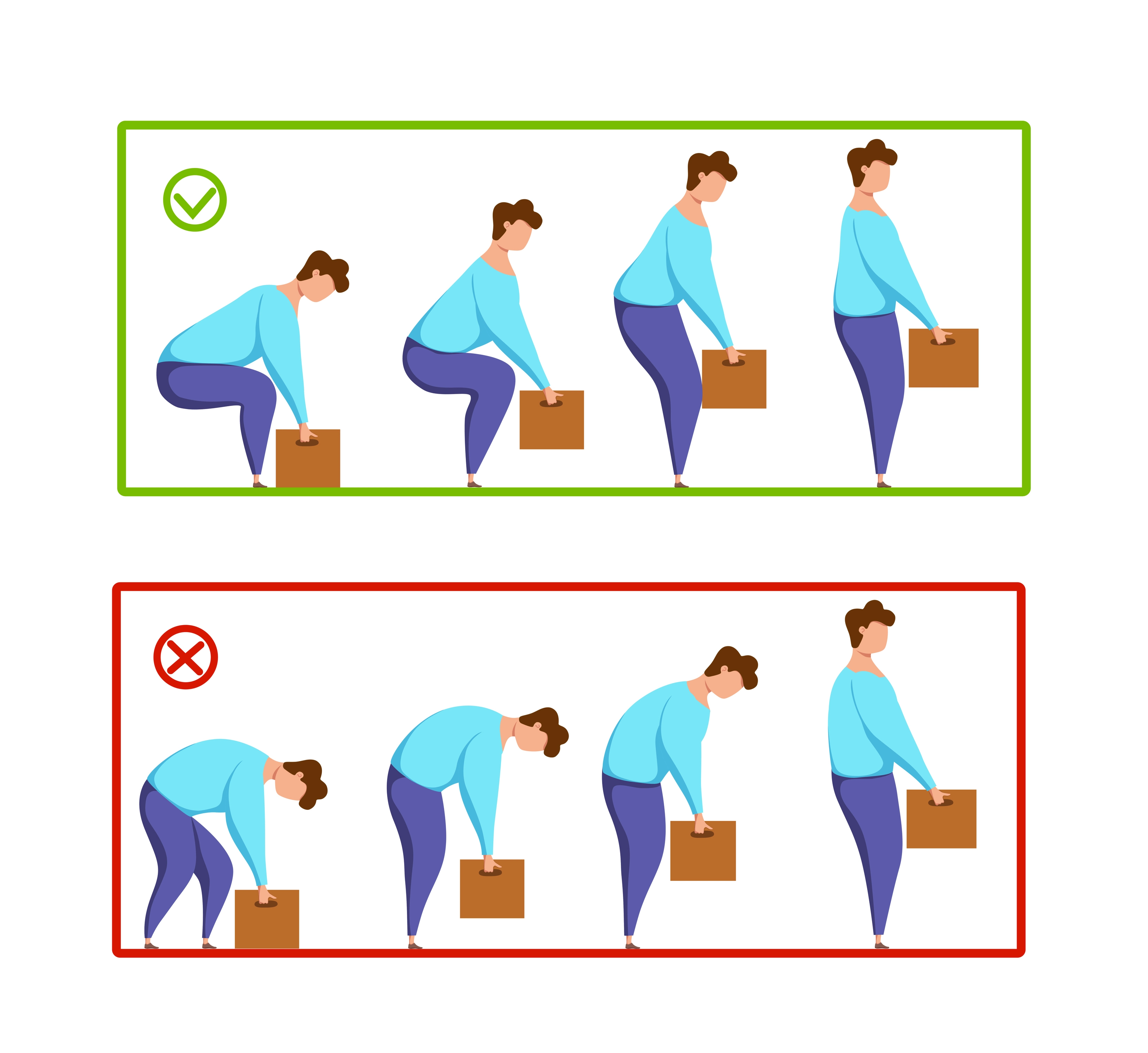
Bend the knees, keep the chest upright, and elbows close to the body. Lower the hips into a slight squat position, aiming to keep the back as straight as possible.
Engage the shoulder blades, push them back and down, squeeze the glutes, maintain a flat back, and push the floor away. Hold this position, lengthening the torso using the glutes, avoiding a sudden upward movement with a bent back.
Common ways to injure your back while lifting
This is frequently one of the most common injuries we encounter, where individuals experience lower back spasms while lifting. It can happen when lifting something too heavy, pulling out a tree root, or even during a mundane task like picking something up from the floor, leading the back to suddenly protest.
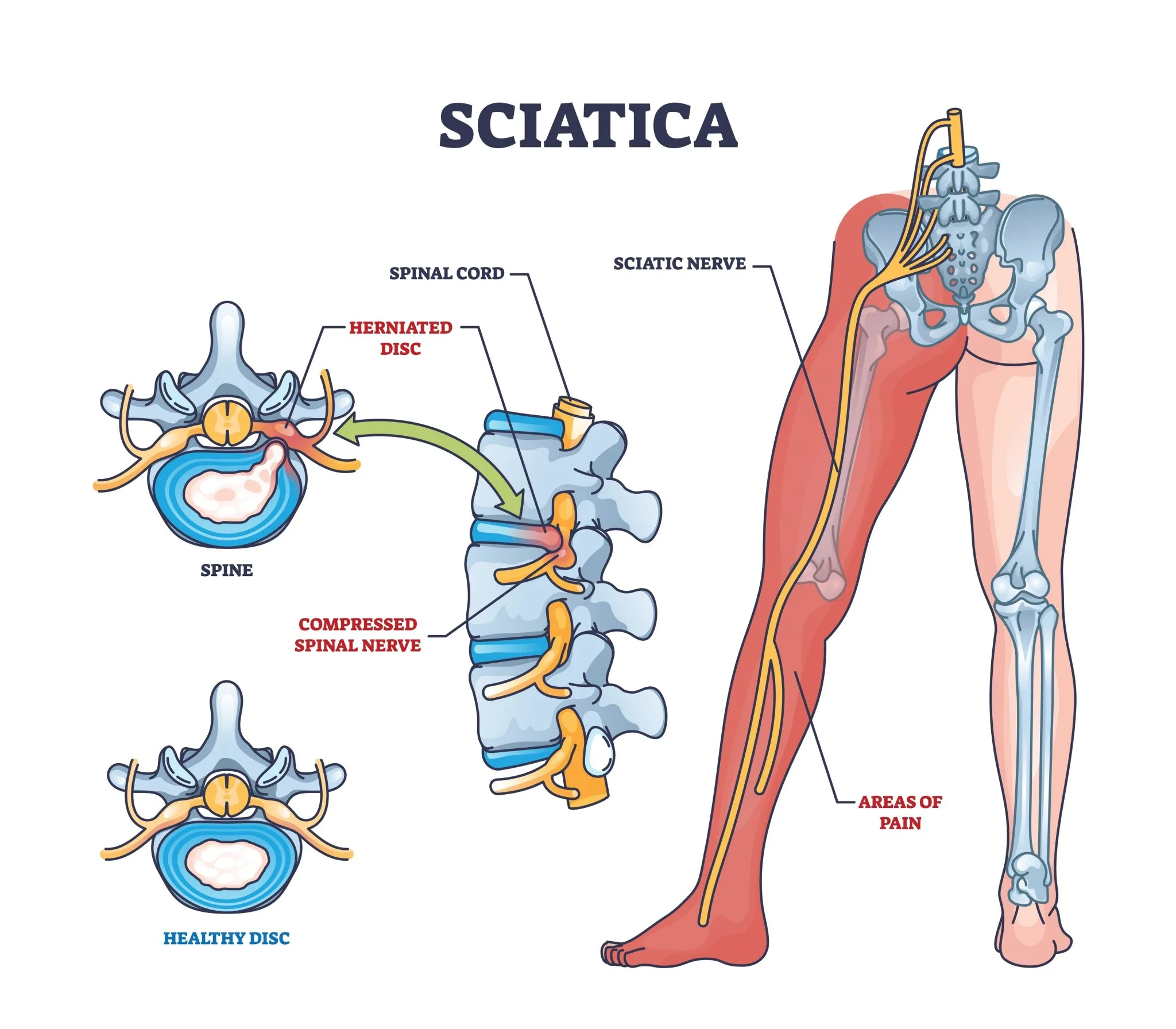
A common mistake is people not bending their knees, directing the full force straight through the lower back—the pivot point of the lever—rather than through the hips. This places tremendous stress on the lumbar spine, with the intervertebral discs bearing the brunt of the weight.
Another issue is a rounded back, causing flexion of the spine. This exerts pressure on the intervertebral discs, subjecting them to excessive stress.
Another frequently cited problem is a misaligned center of gravity, with the person leaning too far forward and unable to direct the extension through the center of the hips, once again placing excessive stress on the back.
When dealing with a back injury, it's crucial to use proper support during heavy lifting. However, it's essential not to become overly reliant on this support, as it disables the vital core muscles needed to build stability in your spine.
If you notice incorrect lifting causing back pain, it's crucial to refrain from heavy lifting for two to three weeks. Keep your body in motion to facilitate muscle fiber healing but avoid excessive stress on your body.